
Brewing History
The history of hard cider dates back to pre-Roman Europe, where the fermentation of apples was a common practice. After the Romans arrived, they introduced new pressing and fermenting technologies, which improved the production of fermented ciders. In the Medieval era, apple cider became a popular alternative to water, which was often unsafe to drink at that time. This tradition was carried on by early colonists to North America. The production of cider was so popular, that it was considered an essential household skill for generations. However, the introduction of Prohibition in the 1920's halted the fermentation of apples, and hot apple cider was made instead. In the late 20th century, hard apple cider began to make a comeback, but the hot cider variation is still just as popular.
Core Beliefs
We can trace the origins of the humble apple thousands of years back in Central Asia. Through the years, the cultivation of the apple tree began to spread throughout Europe and Asia, and later to North America when European colonizers made landfall. As a result, apples have a strong significance in cultures and mythologies all around the world:
Norse: Iðunn, the goddess of youth and fertility in Norse mythology, was said to carry a box of apples, which the gods would eat in order to stay young. It was believed that this would continue until Ragnarök, the foretold death of the gods and end of the world.
Abrahamic: In Abrahamic religions, an apple is often used to depict the forbidden fruit Adam and Eve consume in the Garden of Eden. It's association with Adam and Eve has made the apple a symbol of temptation, forbidden knowledge, and seduction.
Greek: Eris, the goddess of discord, was said to be angry that she was not invited to the wedding of Peleus and Thetis. As revenge, she tossed an apple meant for the most beautiful woman in attendance into the wedding party. Athena, Aphrodite, and Hera all claimed the apple and it was up to Paris of Troy to choose which goddess was worthy of the apple. Aphrodite became the victor when she offered Helen of Troy to Paris, inadvertently starting the Trojan War.
Celtic: In Celtic mythology, druids were said to make their wands from yew or apple trees. The apple is an integral part of Celtic autumnal celebrations. One of these celebrations included gifting apples to friends and family as a symbol of good fortune. Apples would also be placed under the pillows of unmarried people to bring them dreams of their future spouse.
These are just a few of the appearances apples make in folklore and mythology. Its representation across different cultures has made the apple a symbol of temptation, fertility, good fortune, youthfulness, and abundance. In addition to this rich cultural significance, the apple has become linked with autumn and the harvest in North American culture.
How to Make it
Simmering Pot
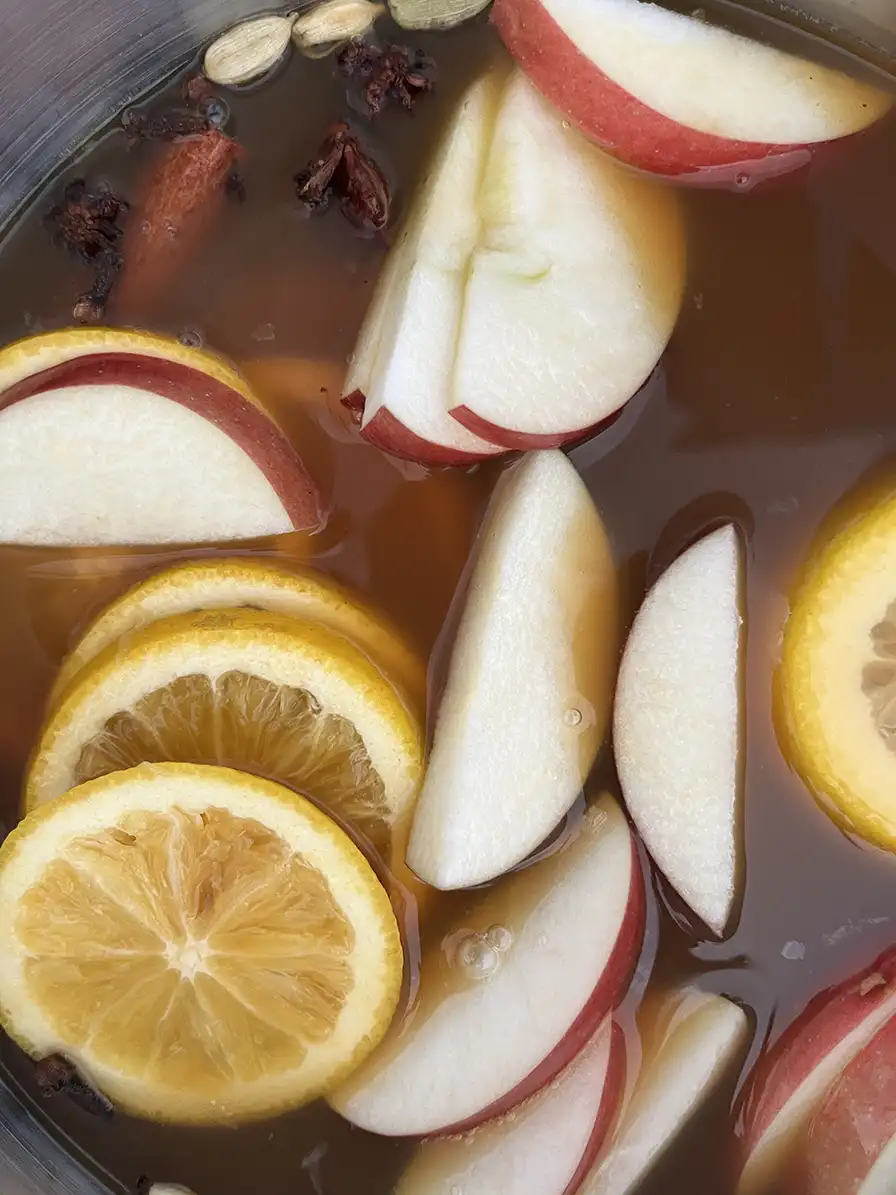
Grab a large pot, and add apple juice, your spices, brown sugar, vanilla extract, orange pieces, and apple pieces. Bring all of this to a boil, then turn the heat down to a simmer. Leave this for 30-60 minutes, stirring every so often.



Spike it!
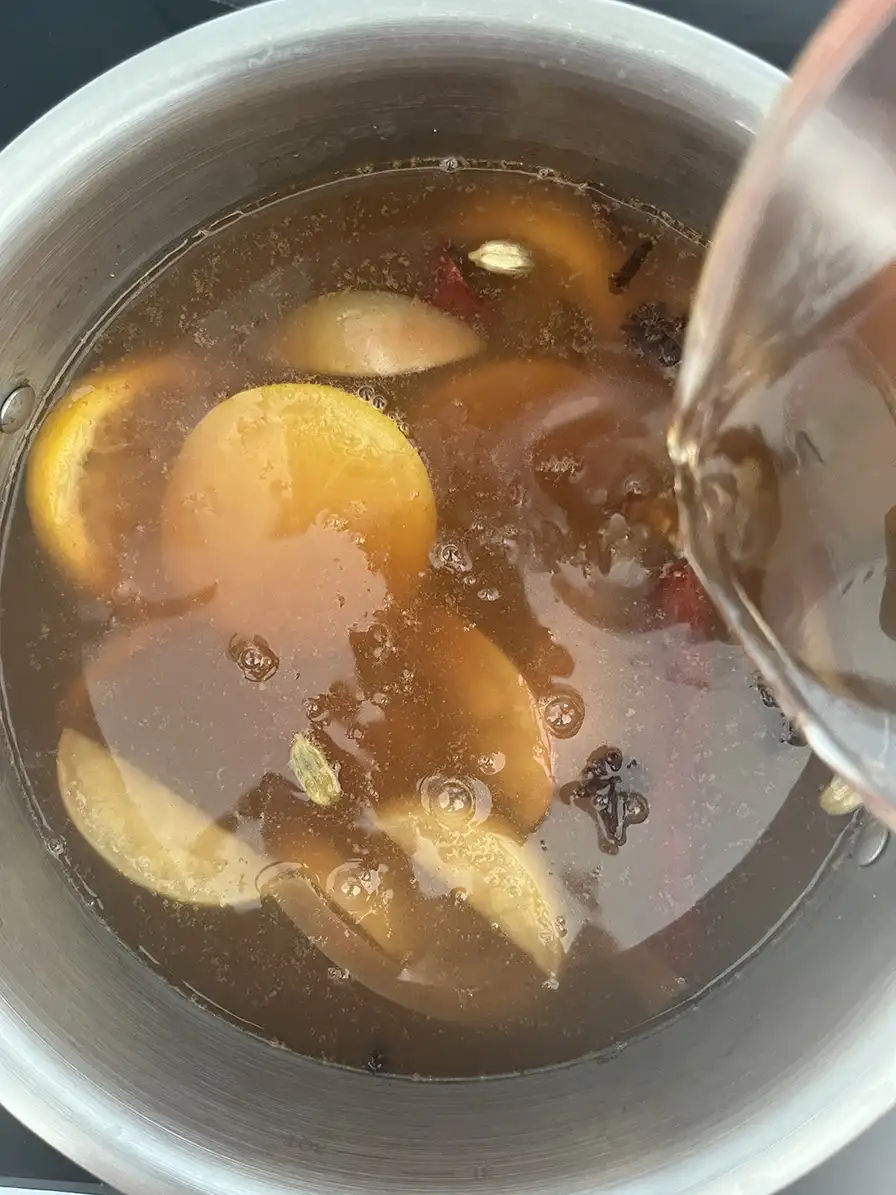
After simmering, remove the pot from the heat and stir in your spiced rum.
And that's it! Ladel the liquid into irish coffee glasses, add a cinnamon stick for garnish, and have a pinterest-worthy autumn.



Spiked Apple Cider
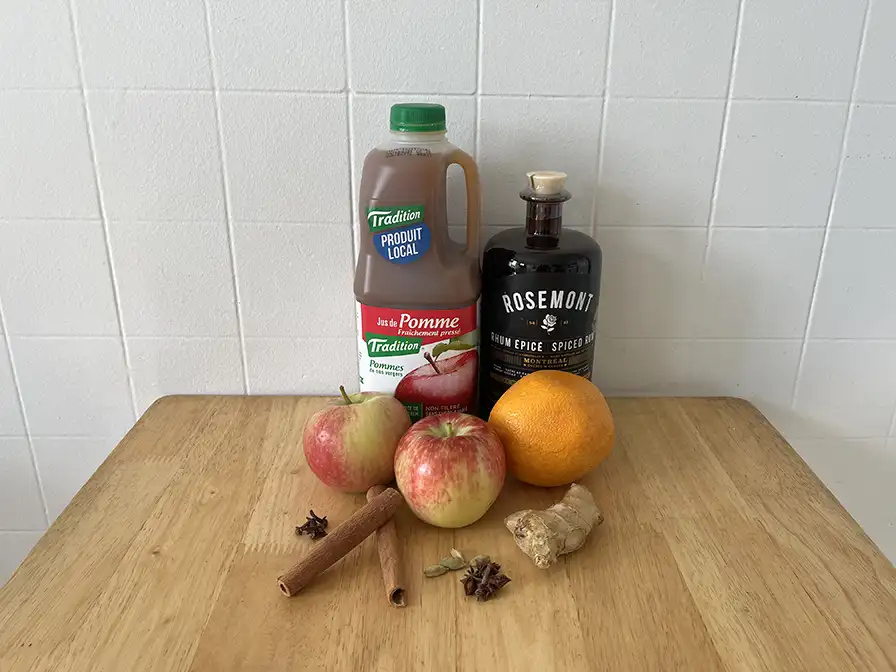
- 6 cups (1.5 L) unfiltered apple juice
- 1 orange, sliced
- 2 apples, sliced
- 2 cinnamon sticks
- 4 cloves
- 4 green cardamom pods
- 2 star anise
- 1 small piece ginger
- 1/4 cup (50 g) brown sugar
- 2 tsp (10 ml) vanilla extract
- 1.5 cups (375 ml) spiced rum
- Large pot
- Knife
- Irish Coffee glasses
- In a large pot, add apple juice, spices, brown sugar, vanilla extract, orange, and apples, and bring to a boil.
- Reduce heat and simmer covered for 30-60 minutes, stirring occassionally.
- Add the spiced rum, remove from heat, and stir.
- Serve in Irish Coffee glasses with a cinnamon stick garnish.